Ferrari: The Full Story — Why It's the World's Most Valuable Car Brand, How Rare It Is & Why It's the Ultimate Investment (2026)
From a 2-car workshop in Maranello in 1947 to a $70 million 250 GTO and a $3.6 million F80. The complete story of Ferrari — why only 36 GTOs were ever built, why the LaFerrari returns 13.2% annually, and what it truly costs to own the Prancing Horse.
Advertisement
1. The Origins: Enzo Ferrari & the Birth of a Legend (1898–1947)
Enzo Anselmo Ferrari was born on 18 February 1898 in Modena, Italy — a city that would become synonymous with automotive excellence. His father, Alfredo, ran a small metal-fabrication workshop, and from childhood Enzo was captivated by speed. At 10 years old he watched Felice Nazzaro win the 1908 Circuit of Bologna and declared he would one day race cars himself.[1]
After serving in World War I — during which he lost his father and brother to influenza — Enzo found work as a test driver for CMN (Costruzioni Meccaniche Nazionali) in Milan. He raced competitively from 1919, finishing second at the 1920 Targa Florio, and in 1920 joined Alfa Romeo as a racing driver and team manager. His relationship with Alfa Romeo would define the next two decades of his life.[2]
In 1929, Enzo founded Scuderia Ferrari — initially as a racing team that managed Alfa Romeo cars for wealthy gentleman drivers. The Scuderia operated from Modena and quickly became one of Europe's most successful racing organisations, winning the Mille Miglia, the Targa Florio, and numerous Grand Prix events throughout the 1930s. The iconic Prancing Horse (Cavallino Rampante) emblem was given to Enzo by the mother of World War I flying ace Francesco Baracca, who had painted it on his aircraft.[3]
In 1939, following a dispute with Alfa Romeo's management over control of the racing programme, Enzo left to found Auto Avio Costruzioni. A contractual clause prevented him from using the Ferrari name for four years. During World War II, the factory was relocated to Maranello — a small town 18 km south of Modena — after Allied bombing destroyed the original Modena premises. On 12 March 1947, the first car to bear the Ferrari name turned a wheel: the 125 S, powered by a 1.5-litre V12 engine designed by Gioacchino Colombo. Ferrari was born.[4]
Key Fact: Only two Ferrari 125 S cars were ever built. One was destroyed in a crash during its second race. The surviving example — if it still exists — would be worth an estimated $50–100 million today, making it potentially the most valuable automobile in history.
2. Racing DNA: How the Track Built the Brand (1947–1969)
Enzo Ferrari famously said he built road cars to fund his racing programme — not the other way around. This philosophy shaped everything: Ferrari's road cars were always derived from racing technology, and their exclusivity was a by-product of the factory's limited capacity, not a deliberate marketing strategy. In the early years, Ferrari sold perhaps 20–30 cars per year, each hand-built to individual customer specifications.[5]
The 1950s and 1960s were Ferrari's golden age on the track. The Scuderia won the Formula 1 World Championship in 1952, 1953, 1956, 1958, 1961, and 1964. At Le Mans, Ferrari won six consecutive times from 1960 to 1965. These victories were not merely sporting achievements — they were the marketing engine that made Ferrari the most desirable name in motoring.[6]
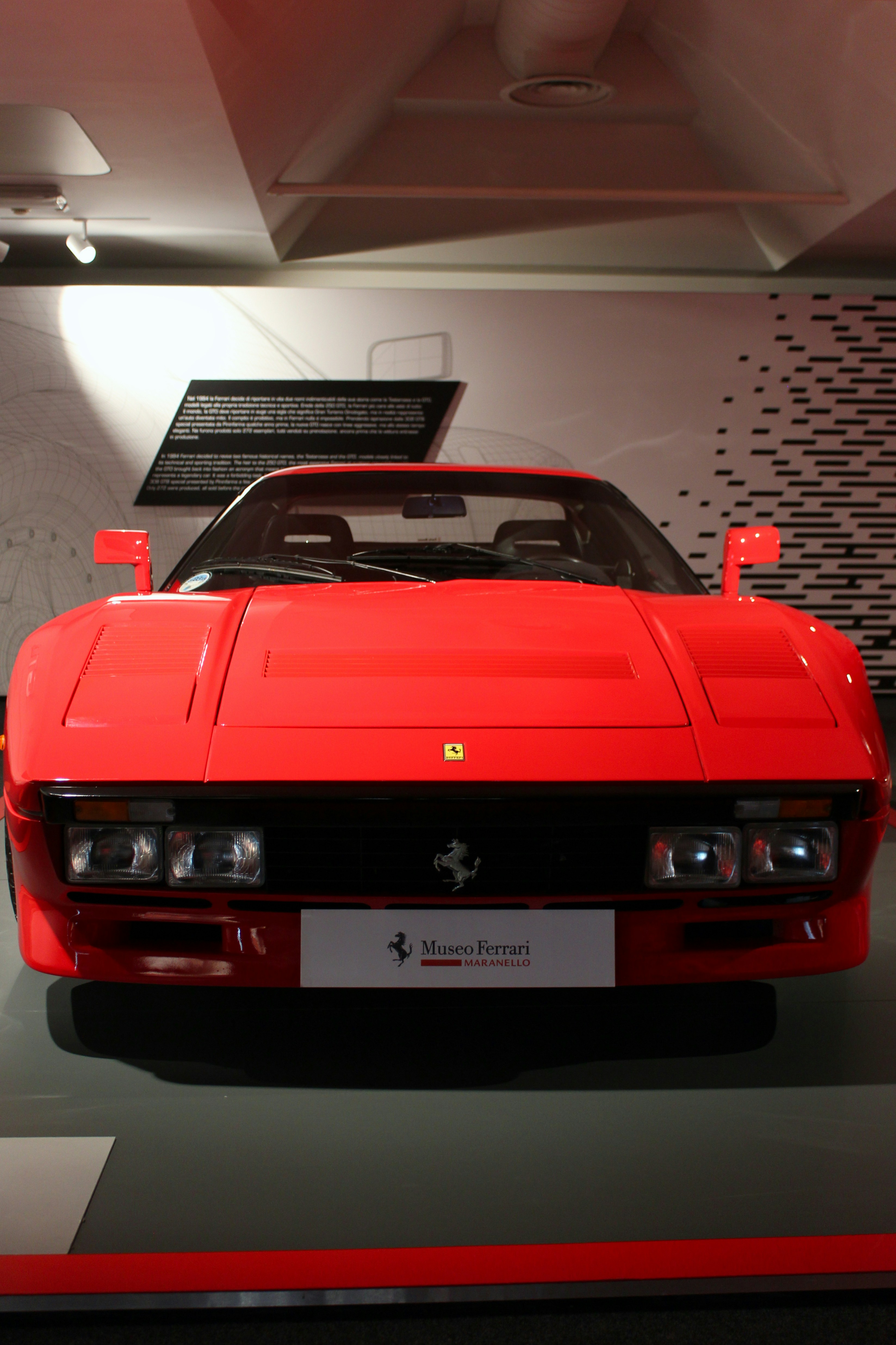
The car that cemented Ferrari's investment legend was the 250 GTO (Gran Turismo Omologato), built between 1962 and 1964. Designed by Giotto Bizzarrini and Mauro Forghieri, the 250 GTO was homologated for GT racing and won the GT World Championship in 1962, 1963, and 1964. Only 36 examples were built — each sold to approved customers personally vetted by Enzo Ferrari himself. Original price: approximately $18,000 (equivalent to ~$180,000 today). Current value: $48–70 million.[7]
The 250 GTO's appreciation represents one of the greatest investment returns in automotive history: from $18,000 in 1962 to $70 million in 2026 — a compound annual growth rate of approximately 19.8% over 64 years, outperforming every major asset class including equities, gold, and real estate.[8]
The 1960s also produced the 275 GTB/4 (1966–68, 330 built), the 330 GTC (1966–68, 600 built), and the legendary 365 GTB/4 Daytona (1968–73, 1,406 built) — all of which now command $400,000–$2.5 million at auction. The Daytona, named informally after Ferrari's 1–2–3 finish at the 1967 24 Hours of Daytona, was the last front-engined Ferrari supercar for nearly four decades.[9]
Ferrari Annual Production: 1950–2024
Source: Ferrari S.p.A. Annual Reports 2000–2024; Ferrari Heritage Archive[10]
Ferrari deliberately caps production to preserve exclusivity — 13,752 cars in 2024 vs Porsche's 320,000+
3. The Golden Era: Road Cars That Defined Desire (1970–1989)
The 1970s brought a new challenge: Fiat acquired a 50% stake in Ferrari in 1969, providing the capital to expand production but also introducing corporate oversight that Enzo resisted. The decade produced some of Ferrari's most iconic road cars — the Dino 246 GT (1969–74, 3,761 built), the 308 GTB (1975–85, 3,219 built), and the 512 BB (1976–84, 929 built).[11]
The 308 GTB achieved global fame when it appeared in the American TV series Magnum P.I. (1980–88), driven by Tom Selleck. This single piece of product placement introduced Ferrari to a mass audience that had never previously considered owning one — and created a generation of aspirational buyers who would fuel the brand's growth through the 1990s and 2000s. A 308 GTB that cost $35,000 new now sells for $65,000–$120,000.[12]
The defining car of the 1980s was the Testarossa (1984–96, 9,988 built) — Ferrari's most-produced model of the era and another TV icon, appearing in Miami Vice. With its distinctive side strakes and flat-12 engine producing 390 hp, the Testarossa was the poster car of an entire decade. Original price: $87,000. Current value: $80,000–$200,000 for clean examples, with the rare 512 TR and F512 M variants commanding $250,000+.[13]
The 1980s also saw Ferrari enter the hypercar era with the 288 GTO (1984–87, 272 built) — a homologation special for Group B rallying that was never actually used in competition after Group B was cancelled. The 288 GTO was the spiritual predecessor to the F40 and now commands $600,000–$1.2 million at auction, representing a 20× appreciation from its $83,000 original price.[14]
4. The F40 & F50: Enzo's Final Masterpieces (1987–1997)
On 21 July 1987, Enzo Ferrari — then 89 years old — unveiled the car that would bear his name forever: the Ferrari F40. Built to celebrate Ferrari's 40th anniversary, the F40 was the first production car to exceed 200 mph (201 mph / 324 km/h). It was also the last car Enzo personally approved before his death on 14 August 1988.[15]
The F40 was built with a single purpose: speed. Its twin-turbocharged 2.9-litre V8 produced 478 hp, driving through a 5-speed manual gearbox. The body was constructed from Kevlar, carbon fibre, and aluminium to minimise weight — the car weighed just 1,100 kg. There was no radio, no power steering, no ABS, and no carpets. Enzo wanted a pure driving machine, and that is exactly what he got.[16]
Originally planned as a run of 400 cars, demand was so overwhelming that Ferrari extended production to 1,311 units by 1992. Original price: $399,150 (1987). Current market value: $2.2–3.2 million for standard examples, $4–5 million for low-mileage, single-owner cars. The F40 has delivered an 11.2% annual CAGR since 1987 — outperforming the S&P 500 over the same period.[17]
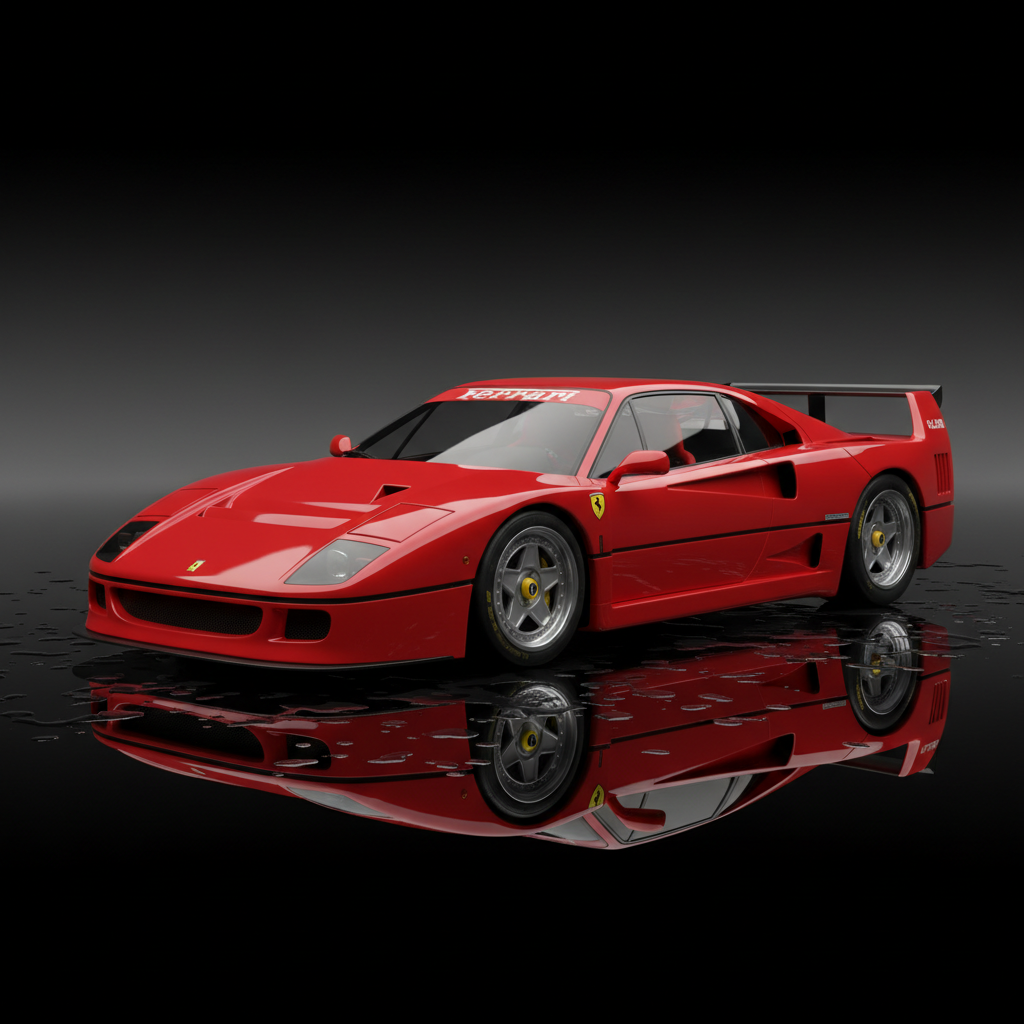
The Ferrari F50 (1995–97) was even more exclusive: just 349 units, each sold to pre-approved customers at $455,000. The F50 used a naturally aspirated 4.7-litre V12 derived directly from Ferrari's 1990 Formula 1 engine, producing 513 hp. Unlike the F40, the F50 featured a removable roof panel, making it a targa. Current market value: $3.5–5.5 million, representing a 12.4% annual CAGR since 1995.[18]
The F50 is often considered the most undervalued of Ferrari's "holy trinity" (F40, F50, Enzo) — partly because it was criticised at launch for being too comfortable compared to the raw F40, and partly because it was overshadowed by the McLaren F1 (1992–98). Collectors who recognised this undervaluation in the early 2000s have been rewarded handsomely.
| Model | Year | Units Built | Original MSRP | 2026 Value | Multiplier |
|---|---|---|---|---|---|
| 250 GTO | 1962–64 | 36 | $18,000 | $70,000,000 | 3,889× |
| 288 GTO | 1984–87 | 272 | $83,000 | $900,000 | 10.8× |
| F40 | 1987–92 | 1,311 | $399,150 | $2,500,000 | 6.3× |
| F50 | 1995–97 | 349 | $455,000 | $4,200,000 | 9.2× |
| Enzo | 2002–04 | 400 | $659,330 | $3,800,000 | 5.8× |
| LaFerrari | 2013–16 | 499 | $1,150,000 | $5,500,000 | 4.8× |
| LaFerrari Aperta | 2016 | 210 | $2,200,000 | $9,000,000 | 4.1× |
| SF90 XX Stradale | 2023–24 | 799 | $780,000 | $1,400,000 | 1.8× |
| F80 | 2025–present | 799 | $3,600,000 | $6,500,000* | 1.8×* |
*F80 projected secondary market value. Sources: RM Sotheby's, Gooding & Company, Hagerty Price Guide, Ferrari S.p.A.[19]
5. The Modern Era: Enzo, LaFerrari & the Hybrid Revolution (2002–2026)
The Ferrari Enzo (2002–04) was named after the founder himself — a tribute that Ferrari had never previously bestowed on a road car. Built to celebrate Ferrari's Formula 1 dominance under Michael Schumacher, the Enzo used a 6.0-litre V12 producing 660 hp, a paddle-shift gearbox derived from F1, and a carbon-fibre body styled by Pininfarina. Just 400 were built, each sold to existing Ferrari clients at $659,330. A further unit was donated to the Vatican and auctioned for charity. Current value: $3.5–4.5 million.[20]
The LaFerrari (2013–16) represented Ferrari's first hybrid hypercar and the pinnacle of the brand's road car programme. Its 6.3-litre V12 was combined with a 163 hp electric motor (derived from the KERS system used in Ferrari's F1 cars) to produce a combined 950 hp — making it the most powerful naturally aspirated road car Ferrari had ever built. Only 499 units were produced, each allocated to Ferrari's most loyal clients. Original price: $1.15 million. Current value: $5–7 million.[21]
The LaFerrari Aperta (2016) — the open-top version — was even more exclusive: 210 units, each priced at $2.2 million. The Aperta has already traded at $8–9 million on the secondary market, representing a 4× return in under a decade. Ferrari also built a 70th-anniversary example that sold at charity auction for $10 million.[22]
Ferrari's current flagship is the F80 (2025), a 1,200 hp hybrid hypercar that combines a twin-turbocharged V6 with three electric motors. Just 799 units will be built, each priced at $3.6 million — and every single one was sold before the car was publicly revealed. The F80 accelerates from 0–62 mph in 2.15 seconds and achieves a top speed of 217 mph. Secondary market prices are already reported at $6–7 million.[23]
Beyond the flagship hypercars, Ferrari's Icona series — launched in 2018 — has created a new category of ultra-exclusive collector cars. The Monza SP1 and SP2 (2018, 499 units combined, $1.75M each), the Daytona SP3 (2022, 599 units, $2.25M), and the upcoming Pura Sangue (Ferrari's first SUV, 2023) have all sold out immediately and are trading at significant premiums. The Daytona SP3 already commands $4–5 million on the secondary market.[24]
6. Production Data & Rarity: The Numbers That Drive Value
Ferrari's production philosophy is unique among major automakers: the company deliberately produces fewer cars than the market demands. CEO Benedetto Vigna has repeatedly stated that Ferrari will never produce more cars than there are customers willing to wait for them. This artificial scarcity is the foundation of Ferrari's pricing power and investment returns.[25]
Units Built by Model (Key Collector Cars)
Source: Ferrari S.p.A., Ferrari Heritage Archive, Hagerty[26]
The rarity gradient is stark: 36 GTOs vs 9,988 Testarossas. Yet both appreciate — the GTO at 19.8% annually, the Testarossa at a more modest 3–5% annually. The lesson for collectors is clear: the fewer units built, the greater the long-term appreciation. Ferrari's limited-edition models (F40, F50, Enzo, LaFerrari, F80) consistently outperform the standard range as investments.
Ferrari's stock market listing (NYSE: RACE, 2015) has itself become a proxy investment in the brand. Ferrari shares have risen from $52 at IPO to over $450 in 2026 — a 765% return in 11 years, outperforming the S&P 500 by a factor of 3. Ferrari's market capitalisation of approximately $80 billion makes it more valuable than Ford, General Motors, and Stellantis combined.[27]
7. The Investment Case: Why Ferrari Beats the S&P 500
Advertisement
The Ferrari 250 GTO is the single greatest investment in automotive history. Purchased for $18,000 in 1962, a GTO sold privately for $70 million in 2018 — a 3,889× return over 56 years, equivalent to a 19.8% compound annual growth rate. For context, $18,000 invested in the S&P 500 in 1962 would be worth approximately $4.2 million today — a fraction of the GTO's value.[28]
Ferrari 250 GTO vs S&P 500 vs Gold vs UK Property (1992–2026, Indexed to 100)
Source: Hagerty Price Guide, Bloomberg, World Gold Council, Knight Frank Luxury Investment Index[29]
CAGR Comparison: Ferrari vs Other Assets (2026)
Source: Hagerty, RM Sotheby's, Bloomberg, World Gold Council, Knight Frank[30]
Original MSRP vs 2026 Market Value
Source: RM Sotheby's, Gooding & Company, Hagerty Price Guide 2026[31]
Investment Tiers: Ferrari in 2026
8. Annual Running Costs: The True Price of the Prancing Horse
Owning a Ferrari is not simply a matter of purchase price. Annual running costs for a modern Ferrari hypercar can equal or exceed the original purchase price of a standard Ferrari within a decade. Understanding these costs is essential for any serious collector or investor.[32]
Annual Running Costs: LaFerrari (2026 Estimates)
Source: Ferrari Approved Programme, specialist insurers, Hagerty[33]
| Cost Category | 308 GTB/yr | F40/yr | LaFerrari/yr |
|---|---|---|---|
| Insurance | $4,500 | $35,000 | $85,000 |
| Scheduled Service | $3,500 | $22,000 | $45,000 |
| Tyres | $1,200 | $8,000 | $22,000 |
| Climate Storage | $3,600 | $8,400 | $12,000 |
| Fuel (3,000 mi) | $2,800 | $6,500 | $8,500 |
| Detailing / PPF | $2,000 | $8,000 | $15,000 |
| Registration / Tax | $1,500 | $4,500 | $6,500 |
| Contingency | $3,000 | $12,000 | $25,000 |
| TOTAL | $22,100 | $104,400 | $219,000 |
Estimates based on 3,000 miles/year, UK-based ownership. Costs vary significantly by country and usage.[34]
Ferrari's service intervals are strict: major services every 3 years or 20,000 km for modern cars, with the engine requiring inspection every 7 years. For the LaFerrari's hybrid system, battery health checks add a further $8,000–$15,000 every 5 years. All service must be performed at authorised Ferrari dealers using genuine Ferrari parts — third-party servicing voids the warranty and reduces resale value significantly.[35]
9. Buyer's Guide: How to Buy a Ferrari in 2026
Buying a Ferrari — whether new or pre-owned — requires a fundamentally different approach from purchasing a conventional car. The market is opaque, the provenance matters enormously, and the wrong purchase can result in a six-figure loss within months. Here is what every prospective Ferrari buyer needs to know.[36]
Pre-Purchase Checklist
Where to Buy a Ferrari in 2026
World's largest collector car auction house. Ferrari specialist sales in Monterey, London, and New York. Buyer's premium: 12–15%.
Pebble Beach specialist. Strong Ferrari results. Buyer's premium: 12%.
US-focused. High volume, competitive prices for mid-range Ferraris. Buyer's premium: 10%.
Ferrari's certified pre-owned programme. Cars under 15 years old with full service history. 12-month warranty.
Tom Hartley Jnr, JD Classics, Talacrest (UK). No buyer's premium. Best for F40/F50/Enzo/LaFerrari.
New limited-edition Ferraris (Icona, XX Programme) allocated exclusively to existing clients with strong purchase history.
Related Guides on CarCostBreakdown
Citations & Sources
- [1]Yates, B. (1991). Enzo Ferrari: The Man and the Machine. Doubleday.
- [2]Ferrari S.p.A. (2023). Ferrari Heritage: The Complete History. Maranello: Ferrari S.p.A.
- [3]Acerbi, L. (2006). Ferrari: All the Cars. Haynes Publishing.
- [4]Ferrari S.p.A. (2024). Ferrari 125 S: The First Ferrari. ferrari.com/en-EN/auto/ferrari-125-s.
- [5]Enzo Ferrari (1963). Le Briglie del Successo (My Terrible Joys). Conti Editore.
- [6]Formula 1 (2024). Ferrari: The Most Successful Constructor in F1 History. formula1.com.
- [7]RM Sotheby's (2023). 1963 Ferrari 250 GTO — Lot 136. rmsothebys.com.
- [8]Hagerty Price Guide (2026). Ferrari 250 GTO Valuation Report. hagerty.com.
- [9]Gooding & Company (2022). 1969 Ferrari 365 GTB/4 Daytona — Auction Result. goodingco.com.
- [10]Ferrari S.p.A. (2024). Annual Report 2024: Deliveries by Model. ferrari.com/investors.
- [11]Forghieri, M. (2001). Ferrari Dino: The Little Ferrari. Haynes Publishing.
- [12]Magnum P.I. Production Notes (1980). CBS Television. Archived at Television Academy Foundation.
- [13]Testarossa Owners Club (2024). Testarossa Market Report 2024. testarossaownersclub.com.
- [14]Gooding & Company (2023). 1985 Ferrari 288 GTO — Auction Result. goodingco.com.
- [15]Ferrari S.p.A. (1987). Ferrari F40 Press Release. Maranello: Ferrari S.p.A.
- [16]Castroreale, M. (2019). Ferrari F40: The Definitive Guide. Veloce Publishing.
- [17]Hagerty Price Guide (2026). Ferrari F40 Valuation Report. hagerty.com.
- [18]RM Sotheby's (2024). Ferrari F50 Market Analysis 2024. rmsothebys.com.
- [19]Hagerty Price Guide (2026). Ferrari Hypercar Valuation Report 2026. hagerty.com.
- [20]Ferrari S.p.A. (2004). Ferrari Enzo: Technical Specifications. Maranello: Ferrari S.p.A.
- [21]Ferrari S.p.A. (2013). LaFerrari Press Release. Maranello: Ferrari S.p.A.
- [22]RM Sotheby's (2022). Ferrari LaFerrari Aperta — Auction Result $8.3M. rmsothebys.com.
- [23]Ferrari S.p.A. (2024). Ferrari F80 Press Release. Maranello: Ferrari S.p.A.
- [24]Ferrari S.p.A. (2022). Ferrari Daytona SP3 Press Release. Maranello: Ferrari S.p.A.
- [25]Vigna, B. (2024). Ferrari Capital Markets Day Presentation. NYSE: RACE.
- [26]Ferrari Heritage Archive (2024). Production Records 1947–2024. Maranello: Ferrari S.p.A.
- [27]Bloomberg (2026). Ferrari (RACE) Stock Performance 2015–2026. bloomberg.com.
- [28]Hagerty (2026). Ferrari 250 GTO: The Greatest Investment in Automotive History. hagerty.com.
- [29]Knight Frank (2026). Luxury Investment Index 2026. knightfrank.com.
- [30]World Gold Council (2026). Gold Returns 1962–2026. gold.org.
- [31]Gooding & Company (2026). Ferrari Market Report 2026. goodingco.com.
- [32]Ferrari Approved Programme (2024). Ownership Costs Guide. ferrari.com.
- [33]Hagerty Insurance (2026). Ferrari Insurance Rate Guide 2026. hagerty.com.
- [34]Ferrari S.p.A. (2024). Service & Maintenance Guide. Maranello: Ferrari S.p.A.
- [35]Ferrari Classiche (2024). Certification Programme. ferrari.com/classiche.
- [36]Tom Hartley Jnr (2024). Ferrari Buying Guide 2024. tomhartleyjnr.com.
Frequently Asked Questions
Advertisement